
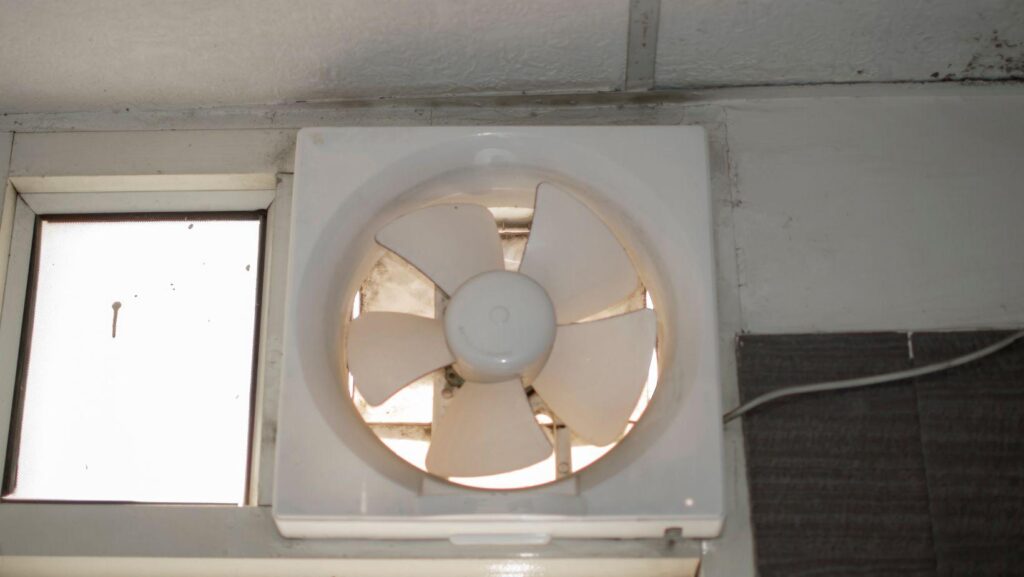
Choosing the wrong exhaust fan is one of those mistakes that doesn’t show up immediately. A facility installs equipment that seems adequate on paper, and only months later does someone notice that heat still lingers near production equipment, that fumes haven’t actually cleared the way they should, or that energy bills keep climbing as an undersized fan runs constantly trying to keep pace with demand it was never built to handle. Getting exhaust fan selection right from the start, across the specific contaminants a facility needs to manage, saves considerably more than the modest upfront effort proper sizing requires.
Understanding What You’re Actually Ventilating
Before any sizing calculation makes sense, a facility needs clarity on exactly what problem the exhaust fan is meant to solve, since heat, fumes, moisture, and dust each behave differently and call for somewhat different ventilation approaches. Heat removal generally focuses on displacing large volumes of warm air before it accumulates near workers or sensitive equipment, while fume extraction often requires more targeted airflow positioned close to the actual source, since fumes can disperse into a broader area if not captured promptly.
Moisture control introduces its own considerations, particularly around preventing condensation buildup that can damage equipment or create slip hazards, while dust extraction frequently demands attention to filtration alongside basic airflow, since simply moving dust-laden air without proper capture can spread particulate matter rather than removing it from the environment. A facility dealing with multiple contaminant types simultaneously, which describes many industrial environments, sometimes needs a combination of ventilation strategies rather than expecting one exhaust fan configuration to handle every airflow challenge equally well.
Calculating the Airflow Your Space Requires
Airflow requirements get measured in cubic feet per minute, and calculating the right figure for a given space starts with the basic air changes per hour method: determining how many times per hour the air within a given volume needs to be fully replaced to maintain acceptable conditions. This calculation begins with the room’s volume, length multiplied by width multiplied by height, then multiplied by the number of air changes appropriate for that specific application.
Different contaminant types and facility uses call for meaningfully different air change targets. A general manufacturing space might require somewhere in the range of six to ten air changes per hour, while a space generating significant heat load, fumes, or dust often needs a considerably higher rate to maintain acceptable air quality. Getting this baseline number right matters considerably, since an exhaust fan selected based on an inaccurate air change calculation will either underperform against actual conditions or represent unnecessary capital and energy expense if oversized well beyond what the space genuinely requires.
Accounting for Heat Load Specifically
Facilities dealing primarily with heat, whether from industrial processes, equipment operation, or simply solar heat gain through a large roof area, need to size exhaust fans against the specific heat load being generated rather than relying solely on a general air change calculation. This involves estimating the total heat output from all sources within the space, machinery, lighting, occupants, and any process-specific heat generation, then determining the airflow needed to remove that heat load at an acceptable rate.
A few practical steps typically guide this heat-focused sizing process:
- Identifying and quantifying every significant heat source within the ventilated space.
- Accounting for seasonal variation, since a fan sized for winter conditions may fall short during peak summer heat load.
- Considering makeup air requirements, since exhausting hot air without adequate replacement air creates negative pressure that can affect fan performance and comfort.
- Factoring in ceiling height and stratification, since heat naturally rises and collects near rooflines in ways that affect where exhaust points should be positioned.
Facilities that skip this heat-specific analysis and rely purely on general air change guidelines sometimes find their ventilation adequate during moderate conditions but inadequate during genuine peak heat periods, precisely when reliable ventilation matters most.
Managing Fumes and Chemical Vapors
Fume extraction requires more careful consideration of capture velocity than general ventilation, since fumes need to be captured at or near their source before they disperse into the broader workspace. This often means positioning exhaust points closer to the actual source of fume generation rather than relying solely on general room exhaust positioned away from where contaminants originate, since dilution ventilation alone can prove inadequate for fumes that pose genuine health risks at even modest concentrations.
Selecting fans for fume control also requires attention to the specific chemical properties of what’s being extracted, since certain fumes require fan construction materials resistant to corrosion from the chemicals involved, and some applications require explosion-proof fan construction when handling flammable vapors. When reviewing exhaust fans from Industrial Fans Direct, facilities should confirm the manufacturer’s construction materials, motor rating, and intended application against the specific fumes or vapors involved, because a standard fan may be unsuitable for corrosive or flammable environments.
Addressing Moisture and Dust Separately
Moisture control ventilation often benefits from fans specifically designed to handle humid conditions without the motor and electrical components degrading prematurely from consistent exposure to damp air. Facilities dealing with significant moisture, commercial kitchens, certain manufacturing processes, or spaces prone to condensation, should look specifically for exhaust fans rated for humid environments rather than standard equipment that might not hold up under sustained moisture exposure.
Dust extraction typically requires pairing an appropriately sized exhaust fan with proper filtration or collection equipment, since moving dust-laden air without capturing the particulate matter simply relocates the dust problem rather than solving it. Sizing for dust applications needs to account for the airflow required to properly convey dust particles through ductwork without settling, which sometimes demands higher velocity than a simple air change calculation alone would suggest, particularly for heavier dust particles that require more airflow to stay suspended and moving toward collection equipment.
Selecting the Right Fan Type for Your Application
Once airflow requirements are established, matching that requirement to an appropriate fan type completes the selection process. Axial fans generally suit applications requiring high airflow volume at lower static pressure, making them a common choice for general heat and moisture ventilation in open spaces. Centrifugal fans handle situations requiring higher static pressure, such as systems with significant ductwork resistance or filtration equipment that airflow needs to move through, making them better suited to many fume and dust extraction applications where air needs to travel through more resistant ductwork paths.
Working with a knowledgeable supplier during this selection stage helps avoid a mismatch between calculated airflow needs and the practical fan type that can actually deliver that airflow given a facility’s specific ductwork configuration and static pressure conditions. Equipment specifications and qualified engineering guidance should connect airflow calculations with a fan type suited to the facility’s ductwork and static pressure conditions.
Final Analysis
Sizing and selecting exhaust fans correctly requires working through several distinct considerations: understanding the specific contaminant type being managed, calculating accurate airflow requirements based on space volume and appropriate air change rates, accounting for heat load or fume capture needs specifically where relevant, and matching the resulting airflow requirement to a fan type genuinely suited to a facility’s ductwork and static pressure conditions. Facilities that work through this process deliberately, rather than selecting equipment based on rough estimates or general industry defaults, end up with ventilation systems that actually perform as needed across real operating conditions. Verifying calculations against specific equipment data provides an additional check against sizing mistakes that may not become apparent until after installation.