
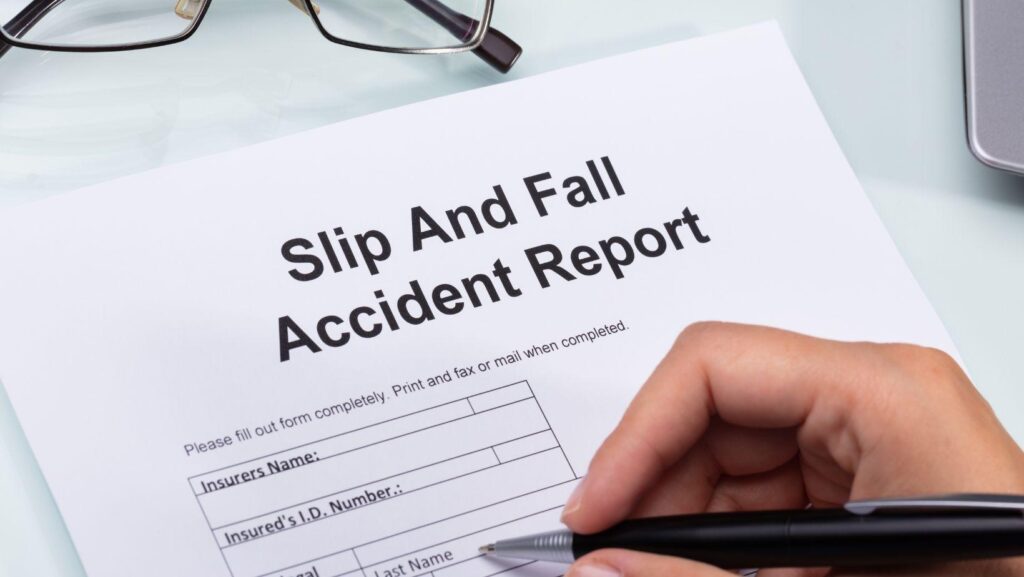
Slip and fall problems can happen in everyday places. A wet floor is one example, especially if there is no warning sign nearby. Another is a pothole in a parking lot that stays unrepaired. Sometimes, it is a loose board on a stairway that staff know not to step on.
When a person gets hurt because of one of these issues, it may be challenging to figure out if the property owner has legal responsibility.
Falls are a major source of injury in the U.S. According to the National Safety Council, they are the second leading cause of preventable injury deaths and the top reason people land in the emergency room for nonfatal injuries, making up 35% of those visits.
There are people who assume that falling on someone else's property automatically means the owner is responsible. That's not how it works. Premises liability, the area of law covering these cases, requires proving several distinct things before a property owner's negligence translates into compensation.
Owning the Property Isn't the Same as Being Automatically Liable
The law requires property owners to make their place reasonably safe for people who are allowed to be there. That duty is real, and courts take it seriously. But a duty existing isn't the same as that duty being breached, and a breach isn't automatically what caused the fall.
That distinction is built into the law itself. Premises liability laws hold property owners, managers, and occupants responsible when their negligence causes an injury, not for every accident on their property.
Most states apply some version of the same basic framework. There needs to be a duty of care owed to the injured person, evidence that the property owner breached that duty by allowing an unsafe condition to exist, proof that the breach actually caused the fall, and documented damages resulting from it. If any one of those elements is missing, the claim falls apart, no matter how badly someone got hurt.
The Hazard Has to Be Something the Owner Should Have Caught
This point is where a lot of slip and fall claims actually get decided. It's not enough to show a hazardous condition existed. An injured person usually must prove the property owner knew about the danger or should have known about it. They typically must also show the owner had a fair chance to resolve the problem or warn people before the fall.
The length of time that the condition was unsafe contributes to establishing the business owner's liability. If a person ran into the hazard and was injured almost instantly after it became present, the business owners or employees may not have been aware of its existence or had an opportunity to address it. A spill left sitting for an hour is a different story. By then, staff reasonably should have spotted it, and that points toward the owner. This circumstance may provide stronger evidence that the property owner failed to take reasonable precautions.
Visible or obvious hazards can add another layer to the analysis. Depending on state law, the fact that a dangerous condition was open and obvious may limit or, in some circumstances, prevent a person from recovering compensation. But an obvious condition does not automatically eliminate a property owner's potential responsibility in every jurisdiction.
Liability issues will depend on the details of each case and state law. Courts will take into account several factors, including the degree of risk involved, how predictable the incident was for the owner, and any carelessness on the part of the visitor. If the case goes to trial, a jury usually decides how much fault falls on each side.
Comparative Fault Changes the Math
Most states don't operate on a strict all-or-nothing basis. If the injured person contributed to their own fall, distracted by a phone, ignoring a posted warning, wandering somewhere they had no real reason to be, that share of fault typically reduces the compensation available rather than eliminating the claim entirely, at least up to a point.
California goes further than most states. It uses pure comparative fault, so an injured person can still recover even if they were mostly to blame, with the award reduced by their share. That is why fault gets fought over so often. The insurer's usual line is that the person should have been watching the floor, and the answer to it can shape the award as much as the hazard itself. A California slip-and-fall lawyer will usually push back with the evidence that matters most, like how long the hazard sat there and whether staff should have caught it.
Recovery is blocked under Georgia law if the claimant is found 50 percent or more to blame.
Not Every Fall Location Works the Same Way
The type of property involved shapes what reasonable care actually requires. Since most retail businesses tend to see a steady flow of people, it is only logical for store owners to inspect more often than homeowners. Businesses face a higher standard because heavy, predictable traffic makes spills and other hazards easy to foresee. An owner who waits for a customer to fall before checking the floor will have a hard time showing reasonable care.
State law varies considerably here too. Some states categorize visitors into invitees, licensees, and trespassers, with different duty levels owed to each. Georgia is one of them. California does not follow this categorization system. The state dropped those categories in 1968 and applies a general standard of reasonable care to nearly everyone on the property.
Georgia lays out what a person has to show in a personal injury case. The state also sets a time limit of two years to file most claims. If the fall happened in a different state, the requirements and the filing deadlines can be different too.
What Actually Gets a Claim Taken Seriously
These cases frequently hinge on good documentation. Hazards are often cleaned up, fixed, or removed within hours. Photos show exactly how the hazard looked, something memory rarely manages weeks later.
Because the physical evidence rarely lasts, the small steps carry more weight here. Reporting the fall right away, getting witness names and numbers, and seeing a doctor promptly can all make the difference.
A property owner being technically negligent somewhere on the premises doesn't automatically mean a given fall was their fault. The hazard has to connect directly to the injury, the timeline has to support that the owner had a real chance to address it, and the injured person's own conduct will be weighed against the owner's. Falls happen constantly. Provable premises liability claims are a meaningfully smaller subset of that larger number.