
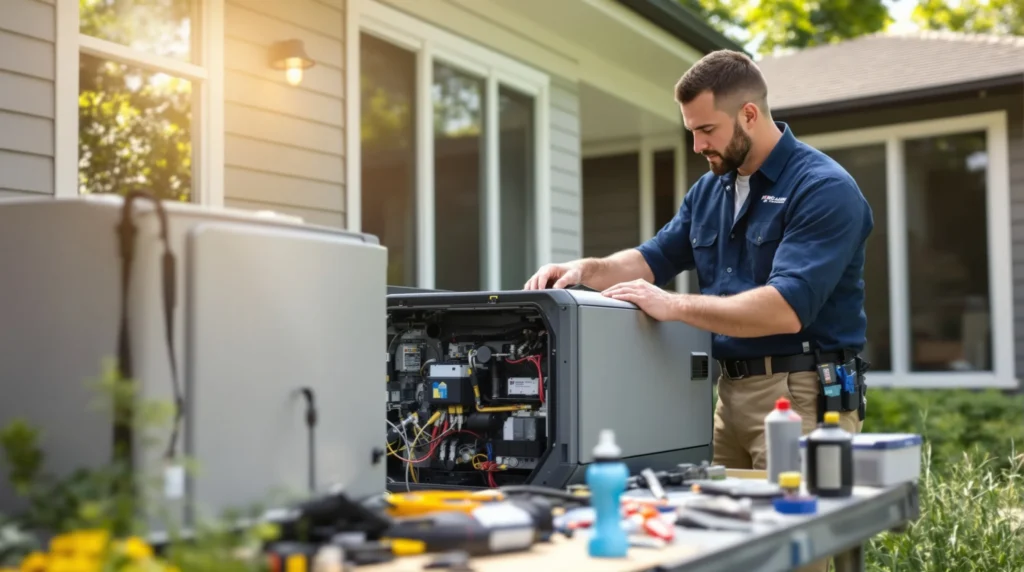
Picture this: It’s 2 a.m. during a thunderstorm. The wind howls, the lights flicker, and then—total darkness. You fumble for your phone, heart pounding, but then you hear it: the steady hum of your whole home generator kicking in. Relief floods you. But here’s the part nobody tells you—if you skip whole home generator maintenance, that hum could turn into silence when you need it most.
Why Whole Home Generator Maintenance Matters
If you’ve ever lost power for more than a few minutes, you know the stakes. Food spoils, pipes freeze, work stops, and comfort disappears. Your generator is your safety net, but only if it’s ready to perform. Whole home generator maintenance isn’t just a chore—it’s your insurance policy against chaos.
Let’s break it down. Generators are like cars. Ignore them, and they’ll let you down. Regular maintenance keeps your generator reliable, efficient, and long-lasting. It’s not just about avoiding breakdowns; it’s about peace of mind every time the sky turns gray.
What Happens If You Skip Maintenance?
Here’s a story: My neighbor, Tom, thought his generator was “set it and forget it.” One winter, a blizzard hit. His generator sputtered, then died. Turns out, a clogged air filter and old oil were the culprits. He spent three days shivering, swearing he’d never skip whole home generator maintenance again.
Neglect leads to:
- Unexpected breakdowns during storms
- Expensive emergency repairs
- Shorter generator lifespan
- Voided warranties
If you’ve ever thought, “I’ll get to it next month,” remember Tom’s frozen pipes and ruined groceries. Maintenance isn’t optional—it’s essential.
What Does Whole Home Generator Maintenance Involve?
Let’s get specific. Whole home generator maintenance covers several key tasks. Here’s what you (or your technician) should check:
- Oil and Filter Changes: Just like your car, your generator needs fresh oil and clean filters. Change them every 100-200 hours of use or at least once a year.
- Battery Inspection: A dead battery means a dead generator. Test and replace batteries as needed, usually every 2-3 years.
- Air Filter Replacement: Dust and debris clog filters, choking your generator. Swap them out regularly to keep air flowing.
- Spark Plug Check: Worn spark plugs cause misfires. Inspect and replace them annually.
- Coolant Level: Low coolant leads to overheating. Top it off and check for leaks.
- Fuel System: Stale fuel gums up the works. Drain old fuel, check lines for cracks, and use stabilizer if storing long-term.
- Exercise Cycle: Run your generator for 20-30 minutes monthly. This keeps parts lubricated and spots issues early.
Here’s why: Skipping even one of these steps can leave you in the dark. Consistent whole home generator maintenance means you’re never caught off guard.
DIY or Professional Maintenance?
If you’re handy, you can handle basic whole home generator maintenance—oil changes, filter swaps, and running monthly tests. But some tasks, like electrical checks or fuel system repairs, need a pro. Don’t risk your safety or your generator’s health by guessing.
Here’s a quick guide:
- DIY: Oil, filters, spark plugs, visual inspections, running exercise cycles
- Professional: Electrical system checks, load testing, fuel system repairs, warranty service
If you’re unsure, call a certified technician. It’s cheaper than a major repair—or a ruined generator.
How Often Should You Schedule Whole Home Generator Maintenance?
Manufacturers recommend a full maintenance check at least once a year, even if you haven’t used your generator much. If you live in an area with frequent outages or extreme weather, consider twice a year. Always follow your owner’s manual for specifics.
Here’s a simple schedule:
- Monthly: Run the generator, check for leaks, inspect battery
- Quarterly: Inspect air filter, check oil level, look for corrosion
- Annually: Full service—oil, filters, spark plugs, coolant, professional inspection
Set reminders on your phone or calendar. Trust me, future you will thank you.
Common Mistakes and How to Avoid Them
We all make mistakes. Here are the big ones I’ve seen (and made):
- Forgetting to check the battery—dead batteries are the #1 cause of generator failure
- Letting fuel sit too long—old fuel clogs the system
- Ignoring warning lights—those little lights mean business
- Skipping the annual professional check—small issues become big problems fast
If you’ve ever thought, “It worked last year, so it’s fine,” you’re not alone. But generators need regular attention, even if they seem okay.
Who Needs Whole Home Generator Maintenance?
If you rely on your generator for medical equipment, work-from-home setups, or just hate cold showers, this is for you. If you only use your generator once a decade, you might get away with less frequent checks—but you’re rolling the dice. For most homeowners, regular whole home generator maintenance is non-negotiable.
Here’s the truth: Maintenance isn’t glamorous, but neither is sitting in the dark, wishing you’d done it. If you want comfort, safety, and control, make maintenance a habit.
Next Steps: Take Control of Your Power
Don’t wait for the next storm to test your luck. Start with a simple checklist. Mark your calendar. If you’re not sure where to start, call a local technician and ask for a maintenance plan. Whole home generator maintenance is your key to a smooth power supply—no more surprises, no more panic, just the quiet confidence that you’re ready for anything.
Remember, the best time to maintain your generator is before you need it. Your future self—warm, safe, and well-lit—will thank you.