
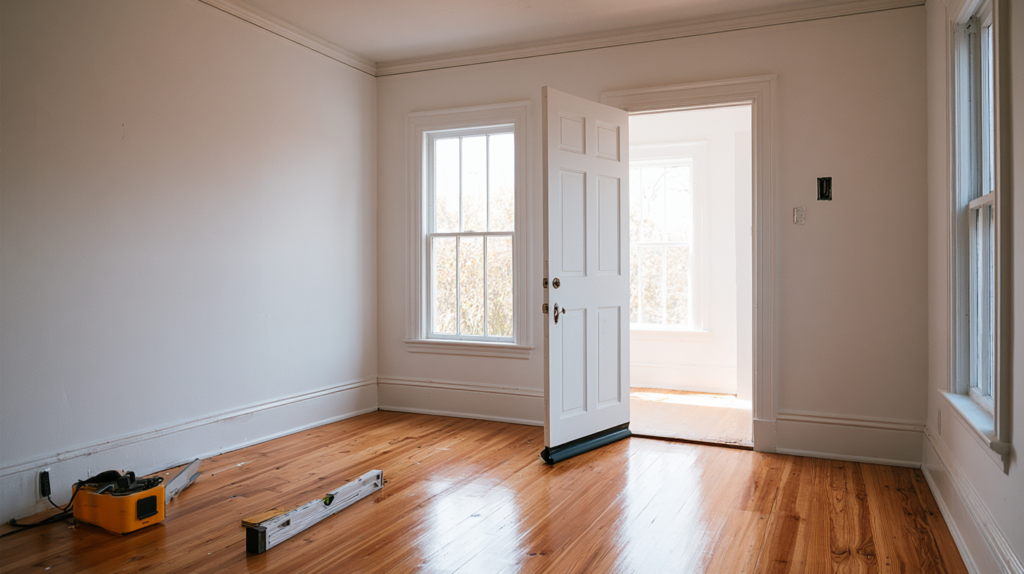
The unit is empty, the previous tenant left it in decent shape, and you’ve got maybe four thousand dollars you’re willing to put in before the listing goes up. Now comes the annual guessing game. New quartz on the kitchen counter? Refinish the floors? Update the bathroom vanity that’s dated rather than broken? Most owners resolve this by picking whatever will look best in the photos, which is a reasonable instinct and an incomplete one.
Two different returns hide inside that budget. Some improvements raise what you can ask, because a prospective tenant compares your listing against four others and yours reads better. Others do nothing for the asking rent and instead keep the person who signs from leaving after twelve months. That second category is worth more than owners generally assume, since a single turnover in most markets costs a vacant month, a few thousand in make-ready, advertising or a leasing fee, and the accumulated wear of a move-out and move-in on the same weekend.
Nobody photographs the retention category, which is exactly why it gets cut. The clearest example is noise. A tenant who likes the apartment, the price and the location will still leave over hallway noise, and acoustic seals for doors address the main entry path for under a couple hundred dollars per unit. Invisible in a listing, invisible at the showing, and directly aimed at one of the top reasons renters give for not renewing.
Two Different Returns, Counted Differently
Rent-moving upgrades work at the showing. They’re visible, comparable and priced by the market, so their value gets set by what competing units offer rather than by what you spent.
Retention upgrades work in months two through twelve. Nobody notices them touring an empty apartment. They show up as an absence of complaints, and their return arrives as a lease renewal that costs you nothing.
Run the turnover math once for your own market and keep it handy. Take the monthly rent, add whatever vacancy typically runs between tenants, add make-ready costs, add advertising or the leasing commission, then add the wear items that only get replaced at turnover. In most mid-market rentals the total lands somewhere between one and two months of rent, sometimes more in slow leasing seasons. Against that number, a few hundred dollars aimed at the reason people leave looks different.
Owners overspend on the visible category for an understandable reason: photos give feedback and turnover reasons don’t. You can see whether a listing gets showings. You rarely find out why somebody chose not to renew, because the question doesn’t get asked and the answer arrives as a form email about relocating for work.
What Actually Moves Asking Rent
Worth being clear-eyed here, because plenty of upgrades that feel significant don’t register with a renter comparing four listings on a phone.
Kitchen and bath surfaces
The two rooms that get compared hardest. Counters, cabinet fronts and fixtures carry most of the perceived value. Replacing a laminate counter and dated hardware usually pays. Gutting a functional kitchen rarely does in a rental context, since the tenant isn’t buying the asset and won’t pay a premium proportional to the spend. Diminishing returns arrive fast once the space reads as clean and current.
In-unit laundry
Where it’s physically feasible, this moves rent more than anything else on the list, and it filters your applicant pool upward. Feasibility is the whole question: plumbing, venting, electrical, and a code-compliant location. Get a plumber’s opinion before budgeting.
Lighting and paint
Cheapest ratio on the list. Fresh neutral paint and modern fixtures set perceived condition across the entire unit, and both photograph well. Replace anything with a builder-grade dome light, especially in the entry and kitchen.
Flooring
Hard surface throughout usually leases faster than carpet and survives more tenancies, which matters more than the rent bump. Carpet in bedrooms remains defensible on cost and on noise between floors in multifamily.
One caveat over all of it: your comp set caps the outcome. Pull three competing listings within a few blocks before assuming any upgrade earns a premium, because a unit priced above its building and its street sits empty regardless of the counters.
What Actually Keeps Tenants From Leaving
Different list entirely, and none of it appears in a photograph.
Noise
The complaint that ends tenancies in buildings people otherwise like. Hallway conversations, doors slamming on a corridor, a neighbor’s television, footsteps overhead. Tenants rarely frame their departure this way in writing, but ask directly and it surfaces constantly. It also happens to have the cheapest fix on this entire page.
Temperature and drafts
Cold rooms in January generate complaints and utility-bill resentment. The same sealing work that addresses noise addresses draft, which is a rare case of one line item paying twice.
Water pressure and hot water recovery
Daily irritation, compounding over a year. A pressure-reducing valve set wrong or an undersized water heater turns every morning into a small grievance. Diagnostics cost a service call.
Maintenance response time
Free, and it outranks most physical upgrades in tenant surveys. Answering a request within a day and telling the tenant when somebody’s coming does more for renewal odds than a new vanity.
Storage
Consistently underpriced. A closet organiser system, shelving in a hall closet, hooks and rails in an entry. A hundred and fifty dollars of components buys a lot of goodwill in a small unit.
The Door Work Nobody Puts on the Make-Ready List
Doors deserve their own section because they’re the single largest opening in an otherwise solid envelope, and they get inspected for function rather than for gaps.
Sound follows air. The entry door on a corridor typically sits with a half-inch or larger undercut, required for airflow and delivered by every builder, which acoustically is an open window at floor level. Add the perimeter gap where the slab meets the stop, a peephole, sometimes a mail slot, and you’ve got more sound entering through that one plane than through all the surrounding drywall. On shared walls, outlet boxes cut through the board do a smaller version of the same thing.
The fix list is short. A door bottom seal or an automatic door bottom that drops when the door closes. Perimeter gasketing around the frame. Acoustical sealant at any penetration through a shared wall, including behind outlet boxes. Materials run modest money per unit, and installation is measured in minutes for someone who owns a drill.
In multifamily, look past the individual door. A corridor fire door with a failed closer slams all night and generates complaints from every unit on that landing, which is a building maintenance item rather than a unit-level one. Worn thresholds tend to fail across a whole floor at once, since they were installed the same year and get the same traffic. Hard corridor finishes amplify everything, and treatment there benefits every tenant on the floor simultaneously.
One caution that matters legally: entry doors in most multifamily buildings are fire-rated and self-closing. Nothing you add can interfere with the closer, the latching or the rating. Seals designed for the purpose are made to work with that hardware. Improvised solutions are not, and a fire inspector will find them.
Interior doors are the secondary item, worth doing where a bedroom opens directly onto a living area or where a unit was subdivided. Same product, same twenty minutes.
Timing is the practical argument. During vacancy you have free access, no scheduling around a tenant’s work hours, and a contractor already on site for paint and cleaning. Trying to organise this in an occupied unit costs three times the coordination for the same materials.
What to Skip
A few popular spends that don’t return, which is worth saying plainly.
Accent walls, statement wallpaper and anything strongly stylistic. It narrows your applicant pool and gets painted over at the next turnover anyway.
High-end fixtures in a mid-market unit. A renter comparing your listing against three others at the same price doesn’t pay extra for a faucet brand, and the replacement cost when it breaks is yours.
Smart home devices. Locks, thermostats and doorbells create support calls, account transfer headaches at every turnover, and liability questions nobody wants. Some owners do well with them. Most generate work.
Landscaping beyond basic tidiness, in a rental context. Keep it clean, keep it alive, stop there.
Over-improving past your comp set. If comparable units on the street lease at a certain number, a unit at fifteen percent above that number sits vacant while you wait for the tenant who values quartz. Two vacant months erase the upgrade entirely.
And the cheap versions of good ideas: peel-and-stick counter film, bargain-bin hardware, foam squares sold as soundproofing. All of it fails within a tenancy and gets replaced at your cost.
Sequencing a Limited Budget
Order of operations that holds up across most small portfolios.
First, anything that stops a complaint. Sealing, drafts, water, doors. Cheap, invisible, and it protects the renewal you already have.
Second, anything that shows in a photo and lifts perceived condition. Paint, lighting, surfaces that read dated.
Third, discretionary improvements, if there’s budget left, which there usually isn’t.
Do the invisible work during vacancy. Access is free, labour runs uninterrupted, and nobody has to be home.
Then start tracking why people leave, because without it every budget is guesswork repeated annually. Two questions in the move-out email, asked plainly: what would have made you stay, and was there anything about the building that bothered you day to day. Answers come back more candid than expected once somebody has the keys handed in.
For the door and sealing work specifically, Sound Pro Solutions supplies door bottom seals, perimeter gasketing, acoustical sealant and absorption panels, ships nationwide, and will spec what a given door type and unit layout need, including on multi-unit orders where you’re doing a whole floor at once. Send door dimensions, the undercut measurement and a note on where the noise originates, and get a spec before the make-ready contractor arrives.